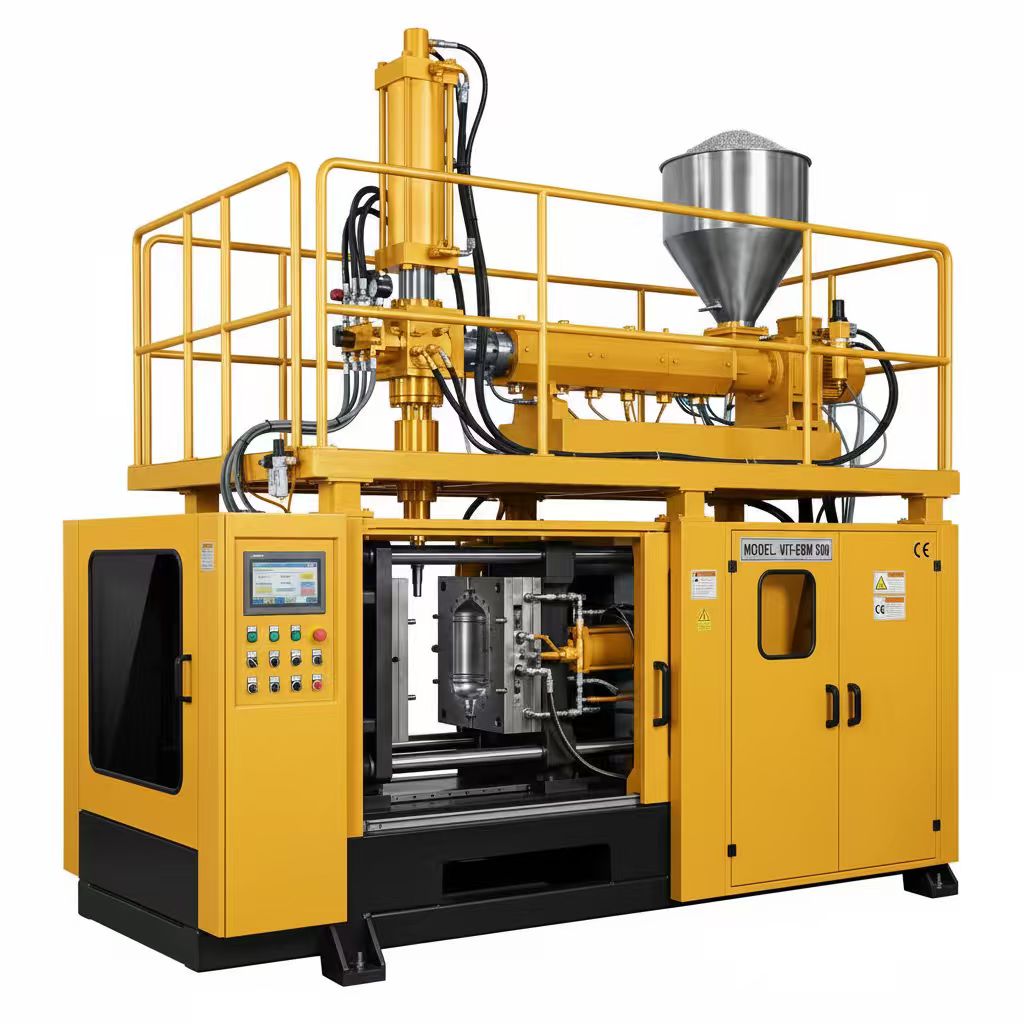
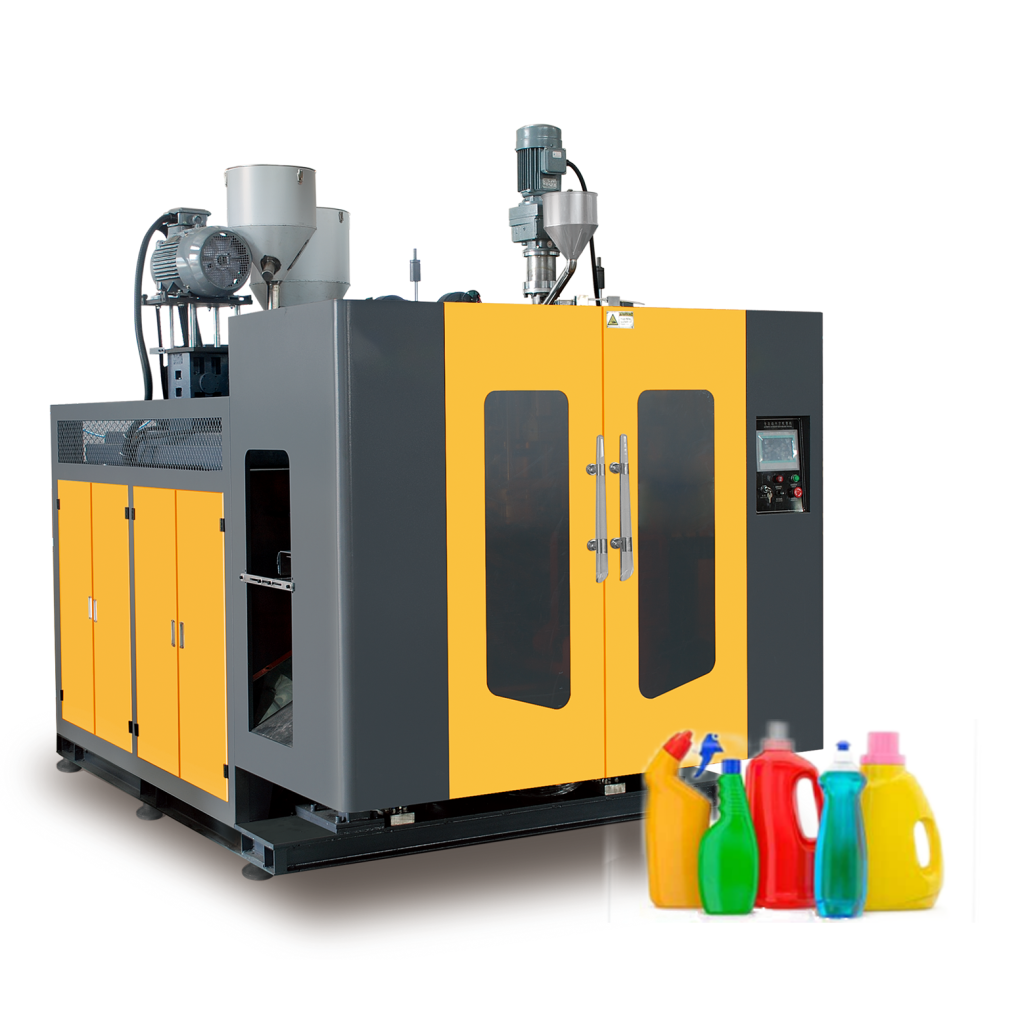
Dip blow molding is a cornerstone process in the plastics manufacturing industry, enabling the production of hollow plastic parts with complex geometries and robust mechanical properties. As a leading blowing machine manufacturer, Maiwei has witnessed firsthand how the cooling stage can make or break the quality, productivity, and cost-effectiveness of dip blow molded products. In this article, we’ll explore the best cooling methods for dip blow molded parts, why cooling is so critical, and how recent innovations are shaping the future of this essential process.
Why Cooling Matters in Dip Blow Molding
The dip blow molding process involves forming a parison (a hollow tube of hot plastic), which is then inflated inside a mold to take its final shape. Once the plastic has conformed to the mold, it must be cooled to solidify and retain the desired form. Improper or inefficient cooling can lead to warping, uneven wall thickness, surface defects, and longer cycle times.
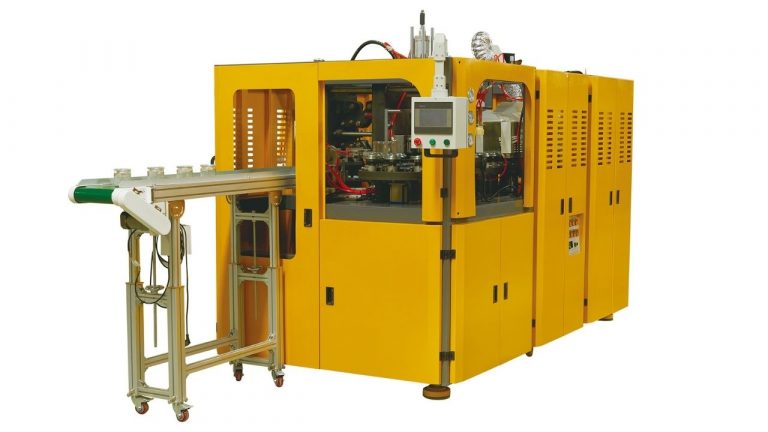
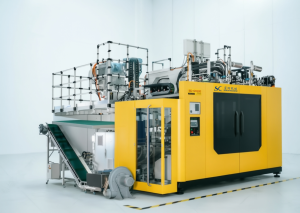
bottle molding machine
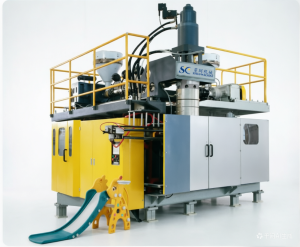
water bottle making machine
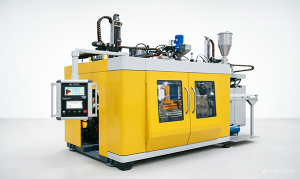
pet blow moulding machine
plastic bottle making machine
plastic blowing machine
water bottle manufacturing machine
bottle manufacturing machine
- Quality Assurance: Cooling affects dimensional accuracy and surface finish.
- Productivity: Faster, uniform cooling shortens cycle times and boosts output.
- Material Properties: Optimal cooling preserves mechanical strength and durability.
At Maiwei, we continually refine our blowing machine technology to support advanced cooling strategies, ensuring our clients achieve superior results with every cycle.
Overview of Common Cooling Methods
Let’s explore the most effective cooling techniques for dip blow molded parts, from traditional to cutting-edge methods:
1. Air Cooling
Air cooling is the simplest and most cost-effective method. After molding, ambient or forced air is circulated around the part and mold to dissipate heat. While this method is energy-efficient and suitable for low-volume production or thin-walled parts, it may not provide the uniformity or speed required for complex or thick-walled products.
- Advantages: Low operational cost, easy to implement, minimal equipment.
- Drawbacks: Slow cooling rates, potential for uneven cooling and warping.
2. Water Cooling
Water cooling is widely used in high-volume manufacturing due to its superior heat transfer capabilities. Water channels are embedded in the mold, allowing chilled water to circulate and extract heat efficiently from the molded part.
- Advantages: Fast, uniform cooling; ideal for large or thick-walled parts.
- Drawbacks: Higher equipment and maintenance costs; risk of leaks or corrosion.
3. Internal Cooling (Core Cooling)
For certain products, especially those with intricate internal geometries, internal cooling is crucial. This involves circulating cool air or water inside the part itself during or immediately after inflation. It’s a technique often integrated into advanced blowing machines, such as those developed by Maiwei.
- Advantages: Excellent for large, hollow products; reduces cycle time.
- Drawbacks: Complex setup; requires precise control to avoid condensation or deformation.
4. Spray or Mist Cooling
Spray cooling involves the application of a fine mist or spray of water onto the surface of the molded part. This accelerates heat removal and can be used in conjunction with air or water cooling for even faster results.
- Advantages: Rapid surface cooling; improves surface finish.
- Drawbacks: Potential for water spots or uneven cooling if not properly controlled.
5. Advanced Cooling Technologies: Conformal Cooling
Conformal cooling channels are custom-designed to follow the contours of the mold, ensuring more uniform and efficient heat transfer. This method is gaining traction among forward-thinking manufacturers and is supported by the latest blowing machine manufacturer innovations.
- Advantages: Uniform cooling, reduced cycle times, improved product quality.
- Drawbacks: Higher initial tooling costs; requires advanced design and manufacturing capabilities.
Maiwei’s Approach to Cooling Optimization
As an industry-leading blowing machine manufacturer, Maiwei integrates multiple cooling options into our machinery, allowing customers to tailor the process to their specific product and production needs. Our machines are engineered for:
- Flexible Cooling Integration: Choose between air, water, or hybrid systems.
- Precision Control: Advanced sensors and controls for real-time temperature and flow monitoring.
- Energy Efficiency: Optimized cooling circuits that minimize energy consumption.
- Maintenance-Friendly Designs: Easy access to cooling channels and components for cleaning and upkeep.
Case Study: Automotive Fuel Tanks
One of our automotive clients needed to improve the dimensional stability of blow molded fuel tanks. By implementing conformal cooling channels in the mold and integrating internal air cooling via our latest blowing machine, they achieved a 20% reduction in cycle time and a significant decrease in warpage. This underscores the importance of choosing the right cooling method for each application.
Best Practices for Cooling Dip Blow Molded Parts
To achieve optimal results, Maiwei recommends the following best practices:
- Analyze Part Geometry: Complex or thick-walled parts may require multi-stage or hybrid cooling approaches.
- Invest in Mold Design: Incorporate conformal or optimized cooling channels from the outset.
- Monitor and Control: Use sensors and automated controls to maintain consistent cooling conditions.
- Regular Maintenance: Prevent clogging or corrosion in cooling channels for sustained performance.
- Test and Validate: Use simulation tools or trial runs to fine-tune cooling parameters.
Emerging Trends and Innovations
Cooling technology in dip blow molding is evolving rapidly. Smart cooling systems with IoT connectivity, real-time analytics, and adaptive control are becoming more common. Maiwei is at the forefront, integrating these advancements into our blowing machines to help manufacturers stay ahead of the curve.
| Cooling Method | Best For | Key Benefit |
|---|---|---|
| Air Cooling | Simple, thin-walled parts | Low cost, easy setup |
| Water Cooling | Large or thick-walled parts | Fast, uniform cooling |
| Internal Cooling | Hollow, complex geometries | Reduces cycle time |
| Spray/Mist Cooling | Surface finish critical parts | Rapid surface cooling |
| Conformal Cooling | High-precision, high-volume | Uniform cooling, improved quality |
Conclusion: Partner with Maiwei for Superior Cooling Solutions
Selecting the right cooling method is essential for high-quality dip blow molded parts. Whether you’re producing simple containers or complex automotive components, Maiwei offers state-of-the-art blowing machines and expert guidance to help you optimize every stage of production. As a trusted blowing machine manufacturer, we’re committed to innovation, reliability, and customer success.
Contact Maiwei today to learn more about our advanced cooling solutions and how we can help elevate your dip blow molding operations.